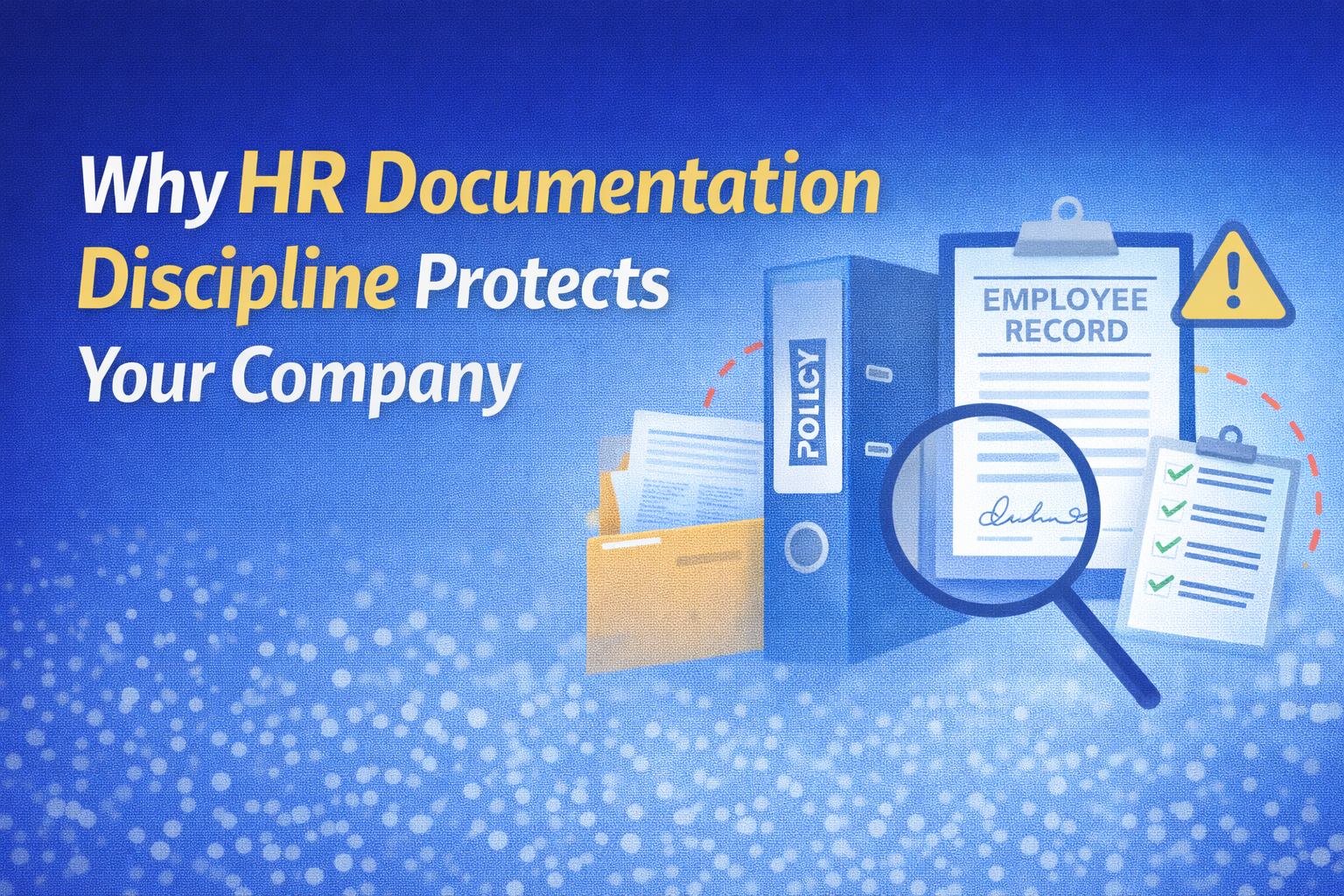
Many business leaders view HR documentation as an administrative task. In reality, documentation discipline is one of the most important tools organizations have for protecting leadership decisions and maintaining workplace fairness.
When organizations grow, leaders make thousands of workforce decisions involving hiring, compensation, performance management, promotions, and discipline. Without clear documentation, it becomes difficult to demonstrate how and why those decisions were made.
Strong documentation practices help organizations maintain consistency, reduce legal exposure, and support leadership teams when difficult workforce decisions must be made.
Organizations that treat documentation as a leadership discipline rather than a paperwork exercise often experience fewer disputes and stronger workplace accountability.
What HR Documentation Actually Means
HR documentation refers to the written records organizations maintain regarding employment decisions, workplace policies, and employee performance.
Examples include:
• employee performance notes
• disciplinary records
• investigation reports
• compensation decisions
• job descriptions
• employee handbook acknowledgments
• written warnings or improvement plans
These records help organizations maintain a clear history of workplace expectations and leadership decisions.
When documentation is consistent and structured, it becomes one of the strongest protections an organization has when employee disputes arise.
Why Documentation Becomes Critical as Companies Grow
In smaller organizations, leadership often relies on memory and informal conversations to manage employee performance.
As organizations expand, however, this approach becomes increasingly risky.
More employees means:
• more managers making decisions
• more performance conversations
• more workplace conflicts
• more employment decisions requiring justification
Without documentation, leaders may struggle to reconstruct events months or years later.
Clear records ensure that leadership decisions remain transparent and defensible.
The Most Common Documentation Mistakes Companies Make
Many organizations understand the importance of documentation but struggle to implement consistent practices.
Several mistakes appear frequently in growing organizations.
Inconsistent Manager Documentation
Managers often approach documentation differently. Some document every performance conversation while others document very little.
This inconsistency creates confusion and can undermine leadership decisions if similar situations appear to be handled differently.
Structured HR guidance helps ensure managers understand when and how documentation should occur.
Waiting Until Problems Escalate
Some organizations begin documenting only after a situation becomes serious.
However, effective documentation should occur throughout the employee lifecycle, including during routine performance discussions.
Early documentation creates a clearer record of expectations and improvement opportunities.
Vague or Subjective Language
Documentation should focus on observable behaviors rather than personal opinions.
Statements such as “bad attitude” or “not a team player” provide little clarity and may be difficult to defend.
Effective documentation describes specific actions, dates, and expectations.
Lack of Policy Documentation
Organizations sometimes focus on documenting employee issues but neglect documenting their own policies and procedures.
Clear policies help ensure employees understand workplace expectations and help leadership maintain consistency.
Well-developed documentation includes both employee records and organizational policies.
How Strong Documentation Protects Organizations
When documentation practices are structured and consistent, organizations gain several important advantages.
Clear Performance Expectations
Employees understand what is expected of them and how performance will be evaluated.
Consistent Leadership Decisions
Managers follow similar standards when addressing employee issues, which strengthens fairness.
Reduced Legal Exposure
Documentation provides evidence that employment decisions were made for legitimate reasons.
Improved Leadership Confidence
Managers feel more comfortable addressing difficult issues when they know documentation supports their decisions.
These advantages help organizations maintain stability as they grow.
The Leadership Role in Documentation Discipline
Documentation discipline is not simply an HR function. It is a leadership responsibility.
Executives and senior leaders set the tone for how workforce decisions are documented and communicated.
Organizations that treat documentation as a leadership priority often develop stronger management practices and clearer accountability across teams.
Without leadership support, documentation systems often become inconsistent or incomplete.
Why Growing Companies Often Need HR Leadership Support
Many organizations recognize the importance of documentation but struggle to implement consistent practices across management teams.
This challenge often arises because managers are focused primarily on operations rather than workforce governance.
Executive HR leadership helps organizations establish documentation standards, train managers, and ensure that employment decisions are properly recorded.
This structure protects both employees and the organization.
How Fractional CHRO Leadership Strengthens Documentation Practices
For many growing organizations, hiring a full-time Chief Human Resources Officer may not yet be practical.
However, companies may still need experienced leadership to establish HR systems that support growth.
A fractional CHRO provides executive HR guidance on a part-time basis, helping organizations build the policies, documentation practices, and leadership discipline necessary for long-term stability.
This includes helping organizations:
• establish documentation standards
• train managers on performance documentation
• implement clear HR policies
• strengthen employee relations practices
• ensure compliance with employment regulations
By building structured documentation systems early, organizations can prevent many disputes before they occur.
How Apollo HR Consulting Helps Organizations Strengthen HR Governance
Apollo HR Consulting provides executive HR leadership and fractional CHRO services to organizations navigating workforce complexity and organizational growth.
Our work focuses on helping leadership teams establish structured HR governance systems that support consistent decision-making and documentation practices.
This includes guidance related to:
• HR policy development
• documentation standards
• manager training
• employee relations support
• compliance oversight
By strengthening documentation discipline, organizations can protect their leadership decisions while building a more stable and accountable workplace.